
Glacier National Park is located in the U.S. state of Montana, which borders the Canadian province of Alberta and British Columbia. Park covers more than 1,000,000 acres (4,000 km2) and includes parts of two mountains (the sub-ranges of the Rocky Mountains), more than 130 named lakes, more than 1,000 species of plants and hundreds of animal species. This vast pristine ecosystem is central to what has been called the "Crown of the Continent Ecosystem," an area of protected areas covering 16,000 square miles (41,000 km2).
Areas which become Glacier National Park was first inhabited by Native Americans and European explorers on arrival, dominated by Blackfeet and Flathead east in the west. Soon after the establishment of the park on May 11, 1910, a number of hotels and chalets built by the Great Northern Railway. Historic hotels and chalets are listed as a National Historic Landmark, and a total of 350 locations in the National Historic Places List. In 1932, work was completed on the Going-to-the-Sun Road, then designated a National Historic Civil Engineering Landmark, which provides broader access to the car park to the heart.
The mountains of Glacier National Park began to form 170 million years ago when ancient rocks east forced up and over a layer of rock that much younger. Known as the Lewis Overthrust, sedimentary rocks are considered to have some examples of the best fossils from the very beginning of life found anywhere on earth. Current form and mountains Lewis Livingston and the position and size of the lake shows evidence of glacial action, which carved U-shaped valleys and moraines left behind that were confiscated to create the lake water. Of the estimated 150 glaciers in the park in the mid-19th century, only 25 glaciers remain active in 2010, scientists studying glaciers in the park has been estimated that all the glaciers might disappear by 2030. If current weather patterns persist.
Glacier National Park has almost all its original endemic plant and animal species. Mammals such as grizzly and mountain goat as well as the less common such as the wolverine and lynx are known to inhabit the park. Hundreds of bird species, more than a dozen species of fish and even some species of reptiles and amphibians have been documented. This park has a variety of ecosystems ranging from prairie to tundra and forest eastern red cedar and hemlock are usually found in large numbers is closer to the Pacific Ocean. Although forest fires broader rare in the park, in 2003 more than 10% of the park was affected by the fire.
Glacier National Park borders Waterton Lakes National Park in Canada-two parks are known as Waterton-Glacier International Peace Park, and designated as the world's first International Peace Park in 1932. Both parks are designated by the United Nations as a Biosphere Reserve in 1976, and in 1995 as a World Heritage site.

* History *
According to archaeological evidence, the Native Americans first arrived in the area of Glacier some 10,000 years ago. Residents beginning with the lineage of the current rate is Salish, Flathead, Shoshone and Cheyenne. The Blackfeet arrived around the beginning of the 18th century and soon dominated the eastern slope of what later became the park, and Great Plains region immediately to the east of the park provided. Blackfeet shelter from the harsh winter winds from the plains, and supplemented their traditional buffalo hunt with other game meats. Currently, the Blackfeet Indian Reservation borders the park to the east, while the Flathead Indian Reservation is located to the west and south of the park. When the Blackfeet Reservation was first established in 1855 by the Lame Bull Treaty, it included the territory east of the park at this time to the Continental Divide.Untuk the Blackfeet, the mountains in this area, especially the Chief Mountain and southeastern regions of the Two Medicine, considered to be " Backbone of the World "and often during a vision quest in 1895., Chief White Calf sales of official Blackfeet mountainous region, about 800,000 hectares (3200 km2), the U.S. government for $ 1.5 million with the understanding that they will defend their rights use of land to hunt public lands along the line will the United States. submit It is defined boundary between the park and reservation flow.
While exploring Mary's River in 1806, Lewis and Clark Expedition came within 50 miles (80 km) of territory that is now the taman.Serangkaian exploration after 1850 helped to shape the understanding of the area which later became the park. In 1885, George Bird Grinnell was hired noted explorer (and later revered writer) James Willard Schultz to lead him on a hunting expedition into what later would become the park After several more trips to the region., Grinnell became very inspired by the scenery that he spent two decades working to establish a national park. In 1901, Grinnell wrote a description of the area, in which he referred to as the "Crown of the Continent", and efforts to protect the land makes it a major contributor to causes ini.Beberapa years after the first visit to Grinnell, Henry L. Stimson and two companions, including the Blackfoot, climbed the steep eastern face of Chief Mountain in 1892.
In 1891, the Great Northern Railway crossed the Continental Divide at Mary Pass 5213 feet (1,589 m), which is along the southern boundary of the park. In an effort to stimulate use of the railway, the Great North in the splendor of the area immediately advertised to the public. The company lobbied Congress of the United States, and in 1897, this park is designated as forest under the designation melestarikan.Di forest mining is still allowed, but not a commercial success. Meanwhile, supporters continue their efforts to protect the area, and in 1910, under the influence of George Bird Grinnell, Henry L. Stimson and railways, the bill was introduced to the U.S. Congress redesignated the area of protected forests into national parks. The bill was signed into law by President William Howard Taft on May 11, 1910 From the month of May. until August, supervisor of forest reserves, Fremont Nathan Haines, manage park resources as a supervisor to act first. In August 1910, William Logan was appointed the first superintendent Park. While the designation of forest reserves confirmed Blackfeet traditional use rights, the law allows the National Park does not mention a guarantee to Native Americans. This is the position of the United States government, that the special designation as a National Park mountain handed multi-land status and rights of their common interests ex again there, as confirmed by the Court of Claims in 1935. Some Blackfeet claimed that the use of their traditional rights still exist de jure. In the 1980s armed standoffs narrowly avoided several times.
The Great Northern Railway, under the supervision of the president of Louis W. Hill, built a number of hotels and chalets Throughout the park in the 1910s to promote tourism. These buildings, constructed and operated by a subsidiary Called the Great Northern Glacier Park Company, modeled on the Swiss architecture were the resource persons as part of Hill's plan to portray Glacier as "America's Switzerland". Stores commonly vacationers pack trips on Horseback Between the Lodges or utilized the seasonal Stagecoach routes to gain access to the Many Glacier area in the northeast.
The chalets, built Between 1910 and 1913, included Belton, St.. Mary, Going-to-the-Sun, Many Glacier, Two Medicine, Sperry, Granite Park, Cut Bank, and Gunsight Lake. The railway Also built Glacier Park Lodge, adjacent to the park on its east side, and the Many Glacier Hotel on the east shore of Swiftcurrent Lake. Louis Hill personally selected the sites for all of these buildings, choosing EACH Backdrops for Their dramatic and scenic views. Another developer, John Lewis, built the Lewis Glacier Hotel on Lake McDonald in 1913-1914. The Great Northern Railway Bought the hotel in 1930, and it was later renamed Lake McDonald Lodge.Some of the chalets were the resource persons in remote backcountry locations accessible only by trail. Today, only Sperry, Granite Park, and Belton Chalets are still in operation, while a building formerly belonging to Two Medicine Chalet is now Two Medicine Store.The chalets and hotel buildings surviving Within the park are now designated as National Historic Landmarks. [20 ] In total, 350 buildings and structures Within the park are listed on the National Register of Historic Places, Including ranger stations, backcountry patrol cabins, fire Lookouts, and Concession facilities.
After the park was established and the visitors began to rely more on cars, work began on the 53 miles (85 km) Go-to-the-Sun Road, completed in 1932. Also known simply as the Sun Road, the road bisects the park and is the only way that business far into the park, going over the Continental Divide at Logan Pass, 6646 feet (2026 m) at the midpoint. Sun Road is also listed in the List of National Historic Places, and in 1985 designated a National Historic Civil Engineering Landmark [22] other routes. along the southern boundary between the National Parks and Forests are U.S. Route 2, crossing the Continental Divide at Mary Pass and connecting the towns of East Glacier and West Glacier. During the 1930s, the Civilian Conservation Corps to help in the development of many parks and camping trail. Increased motor vehicle traffic through the park during the 1930s also led to the construction of new concession facilities at Swiftcurrent and Rising Sun, both designed for car-based tourism. Early auto camps are now also listed on the National List. [19]
In 2011, Glacier National Park honored at the seventh quarter in the United States Quarters series Beautiful. [23]
In 2011, Glacier National Park honored at the seventh quarter in the United States Quarters series Beautiful. [23]
* Parks Management *
Glacier National Park is managed by the National Park Service; park headquarters at West Glacier, Montana. A visit to Glacier National Park on average slightly less than 2 million visitors annually, but some companies are relatively far from major highways and hotels.Glacier National Park has an operating budget of $ 13,190,000 for fiscal year 2008. Budget 2008 increased from 2007 and used to increase the staff level employees, but the money for road maintenance and project work will not come [24] In anticipation of the 100th anniversary of the park in 2010, major reconstruction of the Going-. to-the-Sun Road is in progress, and the temporary road closure is expected by then. Federal Highway Administration is managing the reconstruction project in collaboration with the National Park Service [25] Some of the rehabilitation of large structures such as visitor centers and historic hotels, as well as improvement of waste water treatment facilities and camping, is. It is expected to be completed by the anniversary date. Also planned for the study of fisheries of Lake McDonald, updates from the archives of the history and restoration of roads.National Park Service's mandate is to "... preserve and protect natural and cultural resources." Organic Act August 25, 1916, established the National Park Service as a federal agent. A major part of the Act has often summarized as "Mission", "... to promote and regulate the use of ... national parks ... which aims to conserve the scenery and the natural and historic objects and wildlife therein and to provide enjoyment of the same in such manner and in that way would leave them intact for the enjoyment of future generations. " [26] In accordance with this mandate, hunting is illegal in the park, as are mining, logging and removal of natural or cultural resources. In addition, oil and gas exploration and extraction are not allowed. This restriction, however, led to many conflicts with the Blackfeet Indian Reservation to remember that when they sold the land to the government of the United States was the provision to be able to defend their right to use the area, many of which (such as hunting) has come into conflict with these regulations . [10] In 1974, a wilderness study submitted to Congress which identifies 95% of the park area as qualifying for wilderness designation. Unlike some other parks, Glacier National Park has not been protected as wilderness, but the National Park Service policy requires that the areas identified are listed in the report are managed as wilderness until Congress makes a full decision. [21] Ninety-three percent of Glacier National Park is managed as wilderness, although not yet officially determined. [27]
* Geography *
Park is bounded on the north by the Waterton Lakes National Park in Alberta, and Flathead Provincial Forest and Akamina-Kishinena Provincial Park in British Columbia [28] To the west., North fork Flathead River forms the western boundary, while the middle fork is part of the southern boundary. The Blackfeet Indian Reservation to provide most of the eastern boundary, and the Lewis and Clark and Flathead National Forest forms the southern boundary and west. [29] The remote Bob Marshall Wilderness Complex is located in the two forests immediately to the south. [30]Park contains a dozen large lakes and 700 smaller ones, but only 131 lakes have been named [31] Lake McDonald on the west side of the park. is the longest (9.4 miles (15.1 km)), the largest in area (6823 hectares (27.61 km2)) and deepest (464 feet (141 m)) lake. Many smaller lakes, known as tarns, located in cirques formed by glacial erosion. Some of the lakes, such as Avalanche Lake and Lake kracker, colored an opaque turquoise by suspended glacial clay, which also caused some rivers to run the white milk. Lake in Glacier National Park remained cool throughout the year, with temperatures rarely above 50 ° F (10 ° C) on their surface [31] cold water like this lake plankton growth a little support, ensuring that the lake water is very clear .. The lack of plankton, however, lower levels of pollution filtration, and pollutants have a tendency to linger longer. As a result, the lake environment are considered bellwethers because they can quickly be affected by a smaller increase in pollutants. [32]Two hundred waterfalls scattered throughout the park, however, during the dry period this year, many from reduced to a trickle. The largest fall among the Two Medicine area, McDonald Falls in Valley Falls Swiftcurrent McDonald and Many Glacier area, which is easily observed and close to the Many Glacier Hotel. One of the highest waterfall is the Bird Woman Falls, which fell 492 feet (150 m) from a hanging valley below the north slope of Mount Oberlin. [33]
* Geology *
Stone found in the park mainly sedimentary rocks of the Belt supergroup. They were deposited in shallow seas over 1600 to 800 million years ago. During the formation of the Rocky Mountains 170 million years ago one of the area now known as the Overthrust rock Lewis was forced to east 50 miles (80 km). Overthrust is several miles thick and hundreds of miles long. [34] This resulted in older rocks being displaced over the newer, so the upper Proterozoic rocks are between 1.4 and 1.5 billion years older than Cretaceous age rocks now they rest on. [34] [35]
One of the most dramatic evidence of this Overthrust visible in the form of Chief Mountain, an isolated peak at the edge of the eastern boundary of the park rises 2500 feet (800 m) above the Great Plains. [35] [36] There are six mountains in the park more than 10,000 feet (3,000 m) in height, with Mount Cleveland at 10,466 feet (3190 m) the highest. [37] appropriately named Triple Divide Peak sends waters towards the Pacific Ocean, Hudson Bay, and Gulf of Mexico watershed, and effectively can be regarded as the pinnacle of North American continent, although the mountain is only 8020 feet (2444 m) above sea level. [38] ...
Rocks in Glacier National Park is the best preserved Proterozoic sedimentary rocks in the world, and has been proven several sources of the world's most useful to note the beginning of life. The same age sedimentary rocks are located in other areas has been greatly modified by mountain building and other metamorphic changes, and consequently the fossil is less common and more difficult to observe [39] The stones in the park to preserve features such as millimeter-scale lamination., Ripple marks, cracks mud, salt-crystal casts, rain impressions, oolites and bed sediment characteristics. Six species of fossil Stromatolites, which consists mainly of algae early organism blue-green, have been documented and dated at about 1 billion years [36] The invention Appekunny Formation, a rock layer well maintained in the park, pushing. behind the established date of the origin of life a billion years of animal management. This rock formation has a blanket structure that is believed the remains are identified early metazoan (animal) life on Earth. [35]
* Fauna *
nearly all known historical plant and animal species, with the exception of forest bison and caribou, are present, providing biologists intact ecosystem for plant and animal research. Two threatened mammal species, grizzly bears and lynx Canada, was found in the park. Although their numbers remain at historical levels, both listed as threatened because in almost every region outside the U.S. other than Alaska, they are also very rare or absent from their historical range. On average, one or two bear attacks on humans occur each year, since the creation of the park in 1910, there have been as many as 10 numbers associated deaths.The from Grizzlies bear and lynx in the park is not known for certain, but park biologists believed in 2008 that there was only above 300 Grizzlies in the park, a study began in 2001 is expected to determine the number lynx.The appropriate population for the Grizzlies and black bears little that is unknown, but biologists use a variety of methods to try and determine the study range.Another accurate population has shown that the wolverine, other mammals are very rare in 48 lower states, persist in park.Other large mammals such as mountain goat (symbol of the official park), Bighorn sheep, moose, deer, mule deer, white-tailed deer, coyotes, and mountain lions are rarely seen, either a lot or common.Unlike in Yellowstone National Park, who started the wolf reintroduction program in the 1990s, believed that wolves naturally recolonized the park during 1980s.Sixty-two mammal species have been documented including dolphins, river otters, porcupines, mink, marten, fisher, six species of bats and various other small mammals.A total of 260 species of birds have been recorded, with raptors such as Bald Eagle, Golden Eagle, Peregrine Falcon, Osprey and several eagle species residing in round.The Harlequin Duck is colorful species of waterfowl found in lakes and rivers. The Great Blue Heron, Tundra Swan, Canada Goose and American Wigeon are waterfowl species more often found in the park. Great Horned Owl, Clark's Nutkracker, Steller's Jay, Pileated Woodpecker and Cedar Waxwing in dense forest along the mountains, and at higher altitudes, Ptarmigan, Timberline Sparrow and Rosy Finch are the most likely Clark seen.The 's Nutkracker is less than with last year due to decrease in the number of whitebark pine.Due to a colder climate, ectothermic reptiles all but absent, with two types of garter snakes and western painted turtles in three species of reptile found only there. Similarly, only six species of amphibians documented, although the species that exist in large numbers. After the forest fires in 2001, several park roads temporarily closed the following year to allow thousands of Western toads to migrate to other areas.Glacier also is home to threatened bull trout are illegal to possess and should be returned to the water if the total inadvertently.A caught 23 fish species in the waters of the park and native game fish species found in lakes and rivers including the cruel trout, pike north, mountain whitefish, Kokanee salmon and Grayling. Introduction in the previous decade Lake trout and non-indigenous fish species has greatly influenced some native fish populations, especially trout and bull trout west slopes cruel.
* Recreation *
Glaciers are far from big cities, and the nearest airport is in Kalispell, Montana, southwest of the park. Amtrak trains stop in the East and West Glacier. A fleet of coaches restored 1930 White Motor Company, called jammers Red, offers tours to all major roads in the park. Drivers of buses called "jammers," because previously-gear jamming occurs during vehicle operation. Tour buses built back in 2001. The buses rebuilt by Ford Motor Company. The bodies were removed from their original casing and built on a modern Ford E-Series van chassis.They also converted to run on propane, to reduce their environmental impact.A number of tours of historic wooden boats, some dating back to the 1920's, operating in some lakes is greater. Several boats have been operated continuously above the seasonal large lake in Glacier National Park since 1927 and carry up to 80 tourists.Hiking is a popular activity in the park. More than half of visitors to the park to take reports rise in the park almost 700 miles (1127 km) from trails.110 miles (177 km) from the Continental Divide National Scenic Trail spans most of the distance of the park north to south, with several alternative routes at a lower altitude if past the plateau that was closed because of snow. Because of the presence of bears and other large mammals, dogs are not allowed on any street in the park, although they allowed in the camp next state which is accessible by vehicle, and along the paved road. Anyone entering the United States over lands or waters of Canada must have passports that match mereka.Banyak day hiking options are available throughout the park. BackCountry allowed camping in tents along the route. A permit is required, which can be obtained from a particular visitor center or arranged in advance. BackCountry Many Glacier is usually not accessible to pedestrians until early June because of snowpack accumulation and the risk of landslide potential, and many traces in the higher altitude snow remained until July. The main camp which allows access to a vehicle that is found throughout the park, mostly near one of the larger lakes. Who pitched in St. Mary's and at Apgar is open year round, but the condition is considered primitive on-off season, as the closed toilet facilities and no running water. All camping with vehicle access is usually open from mid June to mid September.Guide and shuttle service are also available.Fishing is a popular activity in the park and some of the best fly fishing in North America can be found in the river that flows through the park. Although the park requires that they understand the fishing regulations, permits are not required to fish within park waters. Threatened bull trout must be released immediately back into the water if caught, if not, the rules concerning the limits of liberal catch per day.winter recreation activities in Glacier limited. Snowmobiling is illegal in the entire park, but cross country skiing is allowed in the lowland valleys away from the zone of potential landslides.
* Map *
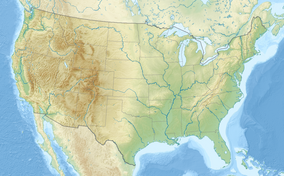
Location Flathead County and Glacier County, Montana, United States
Nearest city Kalispell
Coordinates 48 ° 41'47 .72 "N 113 ° 43'5 .91" W
Area 1,013,322 acres (410.077 ha) [1]
Established May 11, 1910
Visitors 2,017,430 (in 2010) [2]
Governing body of the National Park Service
World Heritage Site 1995
* Pic Glacier *


0 komentar:
Post a Comment